
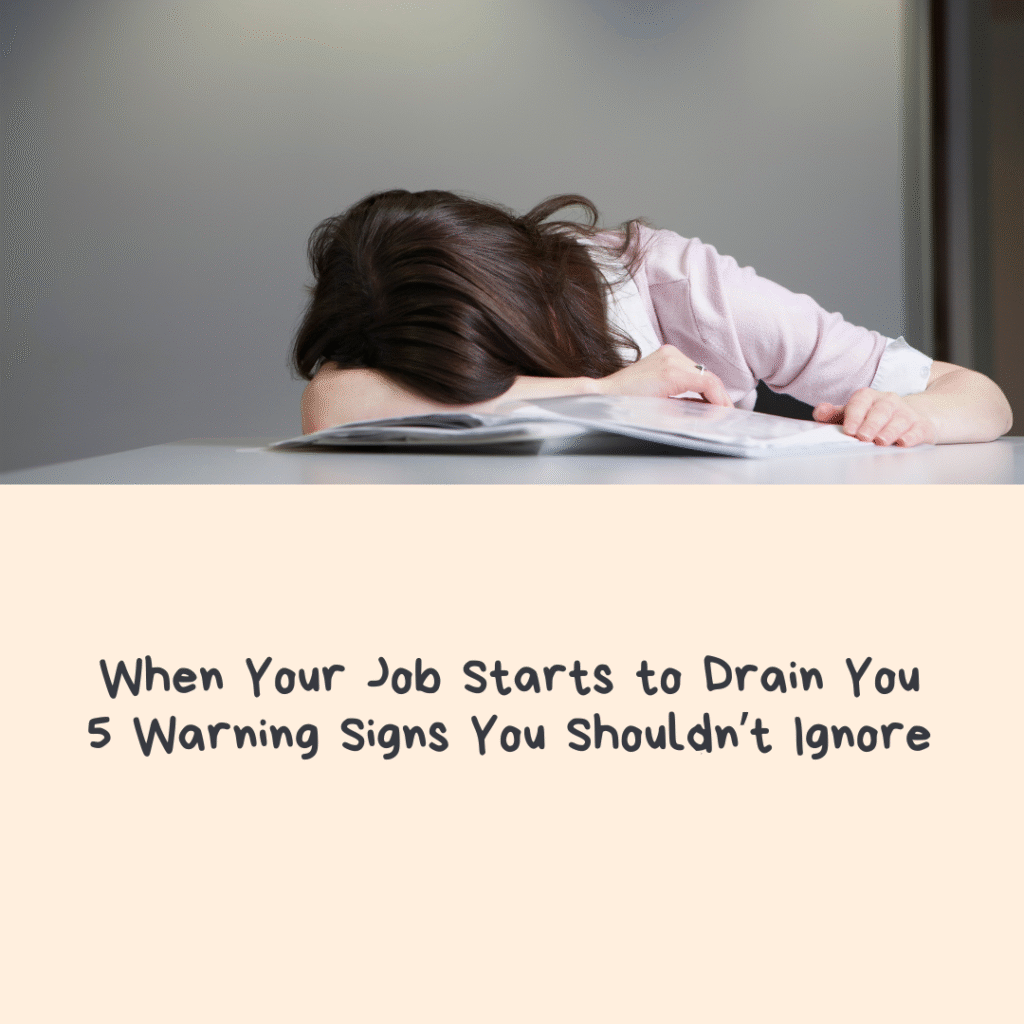
Work is an important part of our lives — it gives us a sense of purpose, helps us grow, and provides financial security. But sometimes, instead of strengthening us, it slowly wears us down. We may get used to this state and fail to notice that the cost keeps getting higher. So how can you recognize when your job is no longer supporting you but starting to drain you?
1. Constant mental and physical exhaustion
The alarm clock rings, and you immediately feel anxious about the day ahead. Weekends aren’t enough to recharge, and vacations, instead of bringing joy, only remind you that soon you’ll return to the same routine. Add to that headaches, insomnia, muscle tension, or a weakened immune system.
2. Loss of meaning and satisfaction
What used to bring you joy now feels empty. Even completing tasks well no longer gives you satisfaction. More and more often, you catch yourself asking: “Why am I even doing this?” If that sense of futility follows you every day, it’s a warning sign.
3. Changes in behavior
Irritability, nervousness, arguments at home over trivial things. Avoiding friends because you simply lack the energy. Sometimes escaping into unhealthy coping mechanisms — alcohol, sweets, or compulsive scrolling on your phone. This is the body’s way of signaling overload.
4. Problems with focus and motivation
It becomes harder to concentrate, and easier to get distracted. You start procrastinating, putting tasks off until later, and all you can think about is: “I just want this day to be over.”
5. Lack of balance between work and life
Work doesn’t end at 5 p.m. — you think about it in the evenings, on weekends, even during vacation. It takes up so much space in your life that you no longer have energy left for hobbies, family, or simple rest.
What can you do if you recognize these signs?
-
Pause and observe — write down what drains you the most.
-
Talk about it — with someone close or with a professional. Simply naming the problem often brings relief.
-
Set boundaries — don’t answer emails after hours, give yourself space.
-
Take care of your body — sleep, exercise, and healthy food strengthen your mental health.
-
Seek support — a psychologist, career coach, or counselor can help you find solutions
Your job should not be destroying you. If you notice it’s increasingly taking away your health, peace, and joy of life, that’s a signal it’s time to consider change. Because the most important thing is that work is just a part of life — not the whole of it.